


This is the second time Polymarket users have lost funds due to exploits Polymarket has blamed on third-party vendors. In June, customers lost almost $3 million after a malicious script was injected into the frontend. They reimbursed user losses then, and have said they will do the same in this incident as well.
Polymarket users' funds stolen, again
Polymarket users have lost a combined, estimated $2.65 million after a Polymarket exploit. The company acknowledged there had been "an incident" and put the site into "cancel-only" mode, meaning that all bets were disabled outside of cancelling them. They later, once again, claimed that the issue is due to the compromise of a "third-party provider", and re-enabled trading after about an hour.
North Korea hacks Binance for around $6.3 billion, some frozen

Binance has confirmed that an attacker exploited the exchange, stealing around $6.3 billion from multiple hot wallets. The theft has set the new record for the largest crypto theft.
Luckily for Binance, Tether and Circle quickly began freezing some of the exploiter's wallets. Tether froze at least $1.567 billion of the roughly $1.768 billion in stolen USDT, and Circle froze around $800 million of the $823 million in USDC. Binance estimated that $3 billion in total was frozen, though some other networks that have frozen assets are preventing the attacker from cashing out, but may not be able to easily restore them to Binance.
Binance founder Changpeng Zhao, who is not legally allowed to run the exchange yet seems to remain very closely aware of its inner workings, posted early estimates of the freezes and wrote, "I don’t manage Binance (.com) anymore, but as a shareholder, I expect all user funds will be fully covered." He later added, "Loss might be a bit higher than [$1 billion], but will cover." Binance later disclosed that they believed the exploit occurred after a devops employee's laptop was compromised.
Blockchain security firm TRM Labs subsequently attributed the attack to TraderTraitor, a North Korean state-sponsored cybercrime group also known as the Lazarus Group. They have been behind many of the largest cryptocurrency thefts, including the now second-largest hack of all time: the 2025 theft of $1.5 billion from the Bybit exchange.
Blur NFT marketplace to shut down

Blur, the NFT marketplace that overtook OpenSea in trading volume shortly after its 2022 launch, announced it will shut down its website in a month. They also announced that Blend, Blur's NFT lending platform, will stop matching new loans on the same day. Borrowers have until then to repay their loans or let them default.
The announcement comes days after the Blur team said it would also shut down Blast, its Ethereum layer-2 blockchain, because it cost more to run than it earned.
At least $86 million stolen via tampered Ledger hardware wallets resold by CryptoBilis
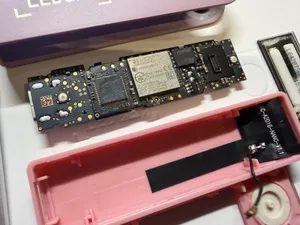
The users of more than 300 Ledger cryptocurrency wallets have suffered an estimated $86 million to $93 million in losses after thieves drained assets across blockchains including bitcoin, Ethereum, and Tron. Ledger is a popular manufacturer of hardware wallets — a type of physical, offline device used to store cryptocurrency keys in an attempt to be more secure than storing keys on Internet-connected devices.
Ledger has claimed that the targeted wallets appear to have been sold via CryptoBilis, a Southeast Asian reseller that operates in Indonesia, Malaysia, and the Philippines. Ledger said that at least one affected device "contained an unauthorized hardware implant". Several third party researchers disassembled affected hardware devices, finding that a chip and antenna had been added to capture crypto wallet seed phrases and transmit the data to the attacker using a cellular connection.
Pudgy Penguins company shuts down its Abstract blockchain after losing "8 figures" running it

Igloo, the company behind the Pudgy Penguins NFTs, announced it will shut down Abstract, its Ethereum layer-2 blockchain, on December 15. CEO Luca Netz said the company had lost "8 figures" in the less than two years they were running the chain.
Users have until December 15 to move their assets, after which anything left on the chain will become inaccessible. DefiLllama estimates there were around $76 million in assets on the chain when the shutdown was announced, leading some users to complain that the wind-down period is too short.
The shutdown comes a few months after Igloo shut down its Pudgy Party mobile game, which had dropped to around 200–300 active users shortly after its launch, and also lost the company millions of dollars.
Blur shuts down its Blast blockchain
Blast, the Ethereum layer-2 created by the team behind the Blur NFT marketplace, is shutting down less than three years after launch. In the announcement, they disclosed that its costs now exceed its revenue and that it sees "no credible path" to fixing that. Despite once boasting of more than $2 billion in total value locked in June 2024, generating revenue from network usage of around $3.5 million, that revenue has collapsed to less than $2,000 last month.
Porsche shuts down its NFT project with the floor price down 96%

When Porsche announced its Porsche 911 NFT project at Art Basel Miami in 2022, it promised holders "he opportunity to co-create Porsche's future in the Web3 universe". Turns out there wasn't much to that future.
After bungling the mint, selling fewer than 2,000 of the planned 7,500 NFTs after buyers balked at the 0.911 ETH (then $1,490) pricetag, the price went nearly exclusively downhill. Now, with the NFTs floundering with floor prices down 96% from launch, Porsche has announced it is ending its "shared adventure".
Near Intents exploited for $3.8 million, recovers all assets

Near Intents, a cross-chain swap service, halted operations after an attacker drained around $3.8 million by exploiting a bug in its Omni layer.
The next day, Near Intents posted addresses for returning the funds and threatened the attacker: "We have identified you, sir." The attacker returned everything the next day, in a transaction that included an on-chain message saying "We've returned all the funds, we were in the wrong". Near Intents confirmed the funds were returned, and said they were stopping their investigation.
Abracadabra proposes winding down after string of hacks years ago left each $1 "stablecoin" token backed by $0.04 in reserves

Abracadabra, the defi project behind the Magic Internet Money (MIM) stablecoin, is shutting down. It blamed its string of hacks: $6.5 million theft in January 2024, $13 million in March 2025, and $1.8 million in October 2025, which altogether left about $21 million in bad debt. According to the shutdown proposal, 22 million MIM are in circulation, backed by just $900,000 in "actionable backing" which puts the supposedly dollar-pegged token at about $0.04. Two wallets voted on the proposal.
In June, a similarly low-participation vote handed "stewardship" of the project to a different group which promised to "revitalize" Abracadabra. Days later, treasury wallets sold around $500,000 worth of MIM. In July, the project tweeted that a roadmap to restore the peg was "coming this week," then never posted again. A week after that tweet, Abracadabra-controlled wallets moved about $8.3 million in treasury assets with no explanation, some of it to a Binance deposit address, in what one commentator called "treasury looting". The wind-down proposal doesn't mention the $8.3 million or count it toward what MIM holders could redeem.
Magic Eden users lose NFTs and $1.8 million in wETH to legacy approvals exploit

Exploiters took advantage of a legacy approvals bug in an old payment processor called Limit Break, which the platform had stopped using in late 2024. The bug affected listings on Magic Eden's EVM marketplace, which the company had shut down earlier this year. The attackers were able to steal numerous NFTs, including 10 Meebits, 50 Otherdeeds, 10 World of Women, and 235 Desperate Apewives. Attackers also subsequently stole 660 wETH (~$1.78 million).
A whitehat rescue spearheaded by blockchain researcher 0xQuit took control of 23,155 NFTs he estimated to be worth "north of $5.7M USD", which he said would be returned to their owners after they revoked the permissions that made the assets vulnerable to theft.
Meter token prices crash after unauthorized mint

An exploiter was able to mint unbacked wrapped MTR and MTRG tokens, notionally priced at more than $2.3 million. They sold some of the tokens on a decentralized exchange, crashing the MTRG price by more than 88%. The price of the project's MTR token — which is supposed to maintain a stable price based on the cost to produce 10 kWh of electricity — also plummeted by approximately the same percentage. Meter has attributed the exploit to a "block validation flaw".
Meter paused the blockchain and bridge, and has urged people not to trade the token. They have warned that "Transactions after block 100731417 may not be honored", suggesting they are considering a blockchain rollback.
Meter suffered another bridge attack in February 2022, which amounted to $4.3 million.
Payy Network bridge fully drained of $1.8 million

The Payy Network, a stablecoin infrastructure company, disclosed that a bridge contract had been fully drained of funds, netting attackers $1.8 million. They later stated that the theft was "NOT a compromised key, social engineering or exploit of our off-chain infrastructure," but has not disclosed what it was. They also announced that the stolen funds were "users' non-custodial deposits to Payy Network / Payy Wallet", which is somewhat of an oxymoron.
Payy Network has halted all activity following the attack.
Duelbits crypto casino goes offline after $7 million theft

The Duelbits crypto gambling site lost around $7 million to an apparent hot wallet compromise. The site went offline shortly after the attack, and the company has said the site will stay offline "until we have clarity". The Curaçao-based platform offers casino games and sportsbetting.
Bitget crypto exchange hacked for $388 million, pauses withdrawals

Attackers stole $387.5 million in crypto assets from Bitget, a cryptocurrency exchange originally founded in Singapore and headquartered out of the Seychelles. Centralized stablecoin issuers Circle and Tether (issuers of USDC and USDT) froze $318,000 in stolen assets, but the vast majority were swapped to decentralized cryptocurrencies and have not been frozen.
Bitget CEO Gracy Chen has said the company believes that a North Korean cybercrime group may be behind the theft. Bitget halted withdrawals shortly after the theft was noticed, citing the need to prevent attackers from stealing more assets. Bitget has said they have sufficient assets to cover the stolen funds.
Projects on the defunct Neutron chain lose $1.8 million to governance attack, Cosmos Hub halts chain

Neutron, a blockchain in the Cosmos ecosystem that entered maintenance mode in June, suffered a governance attack when someone spent $20,200 to acquire enough NTRN governance tokens to pass a vote allowing them to take control of the Neutron-based Astroport and Drop applications, whose contracts contained a combined $9.5 million in assets.
Neutron was paused shortly after the attack, and validators subsequently paused the entire Cosmos Hub network. Together, the pauses prevented the attacker from cashing out the entire amount, though they successfully made off with $1.8 million that they were able to bridge to Ethereum prior to the pause. Cosmos Hub remained paused for approximately 24 hours. During the pause, validators coordinated to move approximately 1.73 million ATOM from the attacker's wallet to a multi-signature wallet controlled by a group of companies operating network validators.
Single attacker steals $2.25 million from three crypto projects in the "Artificial Superintelligence Alliance"

One attacker stole crypto tokens from three cryptocurrency projects that are part of what's called the "Artificial Superintelligence Alliance" — a group of crypto projects "dedicated to decentralized Artificial General Intelligence". The attack occurred within just one day, netting around $2.25 million in actual profits, though the stolen tokens were notionally priced considerably higher.
Most of the profits came from stolen FET tokens, which are linked to Fetch.ai. The attacker was also able to perform unauthorized mints of various tokens, crashing their prices but earning the attacker little in the way of profits. Security researchers noticed that attackers stole assets from sixteen wallets spanning the three companies, suggesting they had significant access to all three companies' systems. Almost $290,000 was taken from a contract used for company payroll.
4,000 BTC (~$320 million) stolen from Liquid Network by claimed whitehats, 90% returned

An unauthorized withdrawal of 3,998.5 BTC (~$320 million) from the Liquid Network, a bitcoin sidechain, prompted a network halt. By disabling nodes that bridge between Liquid and the bitcoin mainchain, attackers are limited in their ability to cash out via bridge. Blockstream, the developers of Liquid Network, also said they had contacted exchanges to ask them to pause LBTC deposits and withdrawals, cutting off another avenue.
The unauthorized transaction included a message reading "we are whitehats. contact us on chain", suggesting the possibility that the withdrawal was in fact well-intentioned security researchers aiming to "rescue" funds after discovering they were vulnerable and then return them to a secure wallet. After some back and forth, the attacker returned 3,400 BTC (~$272 million) keeping 600 BTC (~$48 million), likely as a "bounty".
More Markets exploited for $9.3 million

Defi lending project More Markets lost $9.3 million after an attacker was able to trick the lending protocol logic and empty the project's reserve. The attack was noticed by blockchain security researchers at Blockaid; More Labs later announced they were investigating. Oddly, while acknowledging that funds had been stolen, they wrote, "Our initial investigation reveals that MORE was not exploited. MORE's contracts are secure. MORE is solvent. The protocol is paused." They claimed that only 5% of the assets were bridged out of the Flow blockchain, though did not explain how they planned to prevent the attacker from moving more tokens or collapsing the token price entirely.
Crypto.com-affiliated Cronos blockchain halted after Tectonic theft

The ostensibly decentralized Cronos blockchain was halted after a price manipulation attack allowed an attacker to borrow around $120 million against nearly worthless collateral from the Tectonic lending platform. The attacker pumped the price of the thinly traded TONIC token, the native token of Tectonic, then borrowed against it. The attacker cashed out approximately $9.19 million by bridging it to Ethereum before the Cronos chain was halted, limiting their profits. The blockchain was offline for almost 24 hours, during which time it was rolled back to a block prior to the hack — essentially undoing all the transactions that occurred after that block.
Cronos was launched by the exchange Crypto.com in 2021, and although the two entities are technically separate, they remain very closely linked. Because the Cronos chain is maintained by a relatively small number of validators, many controlled by Crypto.com, it was relatively easy to halt the chain — though the move was criticized by some who felt that it only illustrated Cronos' lack of decentralization and immutability. Some criticized the decision to halt the chain for nearly 24 hours over an exploit of a third-party protocol.
Exploit on Rain crypto payments infrastructure provider causes losses for "self-custodial" neobanks

A vulnerability in a smart contract belonging to Rain, a crypto payments infrastructure provider, resulted in $1.1 million in losses to various firms. Customers of the Avici cryptocurrency neobank, which offers a Visa credit card through which customers can spend crypto, suffered roughly $500,000 in losses. Customers of another neobank, Tria, lost more than $430,000.
The losses are somewhat unusual because the neobanks describe themselves as self-custodial, which normally means that customers have total control over their crypto assets rather than storing them on a third-party platform. Normally, self-custody is more resilient to exploits like this, given that assets remain in user wallets. However, because these neobanks require customers to load funds they want to be able to spend into a third-party contract, they were vulnerable to the theft.
Moonwell loses $8.7 million to fourth exploit in less than a year

An attacker stole around $8.7 million from the Moonwell defi lending protocol after manipulating the price of an illiquid token called MAMO. After pumping the MAMO token price, they "borrowed" various assets and abandoned the overinflated collateral.
This theft is the fourth Moonwell exploit in less than a year, following a $3.7 million oracle manipulation attack in November 2025, another oracle attack in February 2026 amounting to $1.78 million, and a $1 million governance attack in March.
Term Finance loses $8.5 million to governance attack

Ethereum lending protocol Term Finance lost around $8.5 million when an attacker purchased the majority of the project's governance token — which was not widely held — and then voted themselves to be the controller of the project's vaults. Although the project has governance safeguard, including a timelock and veto procedure, neither went into effect for reasons the project has yet to explain.
The attacker withdrew around 2,843 ETH (~$6.9 millon) and $1.68 million in the USDC stablecoin, amounting to about 68% of assets on the platform.
Term Finance previously lost $1.65 million to an oracle misconfiguration error in April 2025, but recovered $1 million of the funds.
KiiChain, TAC, and other Cosmos-based blockchains exploited after "negligent" vulnerability disclosure

Multiple blockchains based on the Cosmos chain suffered exploits after Cosmos Labs publicly disclosed a vulnerability in the Cosmos EVM. Some have criticized Cosmos for "negligence" in their vulnerability management. KiiChain, one of the affected chains, wrote in their postmortem, "This loss was avoidable. ... Publishing a security fix in the open, before the chains running that code have been told privately and given time to patch, hands the vulnerability to anyone reading the commit. Standard responsible disclosure exists precisely to prevent this. Cosmos Labs gave no advance notice to downstream chains, did not flag the release as security critical, and did not tell affected chains that a public release had happened until Friday 21 August, two days later."
KiiChain was exploited for around 148 million KII, which the attacker was able to cash out for around $1.6 million. TAC, a Telegram-focused blockchain, was exploited for about 3 billion TAC (~$7.5 million). Nesa Chain was exploited, and though an attacker was able to steal tokens nominally worth $50 million, lack of liquidity limited their profits to around $60,000. A blockchain called MANTRA also halted due to an exploit, but the network said that no user funds were impacted.