

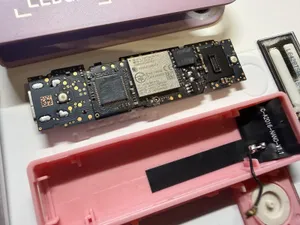
Ledger has claimed that the targeted wallets appear to have been sold via CryptoBilis, a Southeast Asian reseller that operates in Indonesia, Malaysia, and the Philippines. Ledger said that at least one affected device "contained an unauthorized hardware implant". Several third party researchers disassembled affected hardware devices, finding that a chip and antenna had been added to capture crypto wallet seed phrases and transmit the data to the attacker using a cellular connection.
At least $86 million stolen via tampered Ledger hardware wallets resold by CryptoBilis
The users of more than 300 Ledger cryptocurrency wallets have suffered an estimated $86 million to $93 million in losses after thieves drained assets across blockchains including bitcoin, Ethereum, and Tron. Ledger is a popular manufacturer of hardware wallets — a type of physical, offline device used to store cryptocurrency keys in an attempt to be more secure than storing keys on Internet-connected devices.
Magic Eden users lose NFTs and $1.8 million in wETH to legacy approvals exploit

Exploiters took advantage of a legacy approvals bug in an old payment processor called Limit Break, which the platform had stopped using in late 2024. The bug affected listings on Magic Eden's EVM marketplace, which the company had shut down earlier this year. The attackers were able to steal numerous NFTs, including 10 Meebits, 50 Otherdeeds, 10 World of Women, and 235 Desperate Apewives. Attackers also subsequently stole 660 wETH (~$1.78 million).
A whitehat rescue spearheaded by blockchain researcher 0xQuit took control of 23,155 NFTs he estimated to be worth "north of $5.7M USD", which he said would be returned to their owners after they revoked the permissions that made the assets vulnerable to theft.
Meter token prices crash after unauthorized mint

An exploiter was able to mint unbacked wrapped MTR and MTRG tokens, notionally priced at more than $2.3 million. They sold some of the tokens on a decentralized exchange, crashing the MTRG price by more than 88%. The price of the project's MTR token — which is supposed to maintain a stable price based on the cost to produce 10 kWh of electricity — also plummeted by approximately the same percentage. Meter has attributed the exploit to a "block validation flaw".
Meter paused the blockchain and bridge, and has urged people not to trade the token. They have warned that "Transactions after block 100731417 may not be honored", suggesting they are considering a blockchain rollback.
Meter suffered another bridge attack in February 2022, which amounted to $4.3 million.
Payy Network bridge fully drained of $1.8 million

The Payy Network, a stablecoin infrastructure company, disclosed that a bridge contract had been fully drained of funds, netting attackers $1.8 million. They later stated that the theft was "NOT a compromised key, social engineering or exploit of our off-chain infrastructure," but has not disclosed what it was. They also announced that the stolen funds were "users' non-custodial deposits to Payy Network / Payy Wallet", which is somewhat of an oxymoron.
Payy Network has halted all activity following the attack.
Duelbits crypto casino goes offline after $7 million theft

The Duelbits crypto gambling site lost around $7 million to an apparent hot wallet compromise. The site went offline shortly after the attack, and the company has said the site will stay offline "until we have clarity". The Curaçao-based platform offers casino games and sportsbetting.
Bitget crypto exchange hacked for $388 million, pauses withdrawals

Attackers stole $387.5 million in crypto assets from Bitget, a cryptocurrency exchange originally founded in Singapore and headquartered out of the Seychelles. Centralized stablecoin issuers Circle and Tether (issuers of USDC and USDT) froze $318,000 in stolen assets, but the vast majority were swapped to decentralized cryptocurrencies and have not been frozen.
Bitget CEO Gracy Chen has said the company believes that a North Korean cybercrime group may be behind the theft. Bitget halted withdrawals shortly after the theft was noticed, citing the need to prevent attackers from stealing more assets. Bitget has said they have sufficient assets to cover the stolen funds.
Projects on the defunct Neutron chain lose $1.8 million to governance attack, Cosmos Hub halts chain

Neutron, a blockchain in the Cosmos ecosystem that entered maintenance mode in June, suffered a governance attack when someone spent $20,200 to acquire enough NTRN governance tokens to pass a vote allowing them to take control of the Neutron-based Astroport and Drop applications, whose contracts contained a combined $9.5 million in assets.
Neutron was paused shortly after the attack, and validators subsequently paused the entire Cosmos Hub network. Together, the pauses prevented the attacker from cashing out the entire amount, though they successfully made off with $1.8 million that they were able to bridge to Ethereum prior to the pause. Cosmos Hub remained paused for approximately 24 hours. During the pause, validators coordinated to move approximately 1.73 million ATOM from the attacker's wallet to a multi-signature wallet controlled by a group of companies operating network validators.
Single attacker steals $2.25 million from three crypto projects in the "Artificial Superintelligence Alliance"

One attacker stole crypto tokens from three cryptocurrency projects that are part of what's called the "Artificial Superintelligence Alliance" — a group of crypto projects "dedicated to decentralized Artificial General Intelligence". The attack occurred within just one day, netting around $2.25 million in actual profits, though the stolen tokens were notionally priced considerably higher.
Most of the profits came from stolen FET tokens, which are linked to Fetch.ai. The attacker was also able to perform unauthorized mints of various tokens, crashing their prices but earning the attacker little in the way of profits. Security researchers noticed that attackers stole assets from sixteen wallets spanning the three companies, suggesting they had significant access to all three companies' systems. Almost $290,000 was taken from a contract used for company payroll.
4,000 BTC (~$320 million) stolen from Liquid Network by claimed whitehats, 90% returned

An unauthorized withdrawal of 3,998.5 BTC (~$320 million) from the Liquid Network, a bitcoin sidechain, prompted a network halt. By disabling nodes that bridge between Liquid and the bitcoin mainchain, attackers are limited in their ability to cash out via bridge. Blockstream, the developers of Liquid Network, also said they had contacted exchanges to ask them to pause LBTC deposits and withdrawals, cutting off another avenue.
The unauthorized transaction included a message reading "we are whitehats. contact us on chain", suggesting the possibility that the withdrawal was in fact well-intentioned security researchers aiming to "rescue" funds after discovering they were vulnerable and then return them to a secure wallet. After some back and forth, the attacker returned 3,400 BTC (~$272 million) keeping 600 BTC (~$48 million), likely as a "bounty".
More Markets exploited for $9.3 million

Defi lending project More Markets lost $9.3 million after an attacker was able to trick the lending protocol logic and empty the project's reserve. The attack was noticed by blockchain security researchers at Blockaid; More Labs later announced they were investigating. Oddly, while acknowledging that funds had been stolen, they wrote, "Our initial investigation reveals that MORE was not exploited. MORE's contracts are secure. MORE is solvent. The protocol is paused." They claimed that only 5% of the assets were bridged out of the Flow blockchain, though did not explain how they planned to prevent the attacker from moving more tokens or collapsing the token price entirely.
Crypto.com-affiliated Cronos blockchain halted after Tectonic theft

The ostensibly decentralized Cronos blockchain was halted after a price manipulation attack allowed an attacker to borrow around $120 million against nearly worthless collateral from the Tectonic lending platform. The attacker pumped the price of the thinly traded TONIC token, the native token of Tectonic, then borrowed against it. The attacker cashed out approximately $9.19 million by bridging it to Ethereum before the Cronos chain was halted, limiting their profits. The blockchain was offline for almost 24 hours, during which time it was rolled back to a block prior to the hack — essentially undoing all the transactions that occurred after that block.
Cronos was launched by the exchange Crypto.com in 2021, and although the two entities are technically separate, they remain very closely linked. Because the Cronos chain is maintained by a relatively small number of validators, many controlled by Crypto.com, it was relatively easy to halt the chain — though the move was criticized by some who felt that it only illustrated Cronos' lack of decentralization and immutability. Some criticized the decision to halt the chain for nearly 24 hours over an exploit of a third-party protocol.
Exploit on Rain crypto payments infrastructure provider causes losses for "self-custodial" neobanks

A vulnerability in a smart contract belonging to Rain, a crypto payments infrastructure provider, resulted in $1.1 million in losses to various firms. Customers of the Avici cryptocurrency neobank, which offers a Visa credit card through which customers can spend crypto, suffered roughly $500,000 in losses. Customers of another neobank, Tria, lost more than $430,000.
The losses are somewhat unusual because the neobanks describe themselves as self-custodial, which normally means that customers have total control over their crypto assets rather than storing them on a third-party platform. Normally, self-custody is more resilient to exploits like this, given that assets remain in user wallets. However, because these neobanks require customers to load funds they want to be able to spend into a third-party contract, they were vulnerable to the theft.
Moonwell loses $8.7 million to fourth exploit in less than a year

An attacker stole around $8.7 million from the Moonwell defi lending protocol after manipulating the price of an illiquid token called MAMO. After pumping the MAMO token price, they "borrowed" various assets and abandoned the overinflated collateral.
This theft is the fourth Moonwell exploit in less than a year, following a $3.7 million oracle manipulation attack in November 2025, another oracle attack in February 2026 amounting to $1.78 million, and a $1 million governance attack in March.
Term Finance loses $8.5 million to governance attack

Ethereum lending protocol Term Finance lost around $8.5 million when an attacker purchased the majority of the project's governance token — which was not widely held — and then voted themselves to be the controller of the project's vaults. Although the project has governance safeguard, including a timelock and veto procedure, neither went into effect for reasons the project has yet to explain.
The attacker withdrew around 2,843 ETH (~$6.9 millon) and $1.68 million in the USDC stablecoin, amounting to about 68% of assets on the platform.
Term Finance previously lost $1.65 million to an oracle misconfiguration error in April 2025, but recovered $1 million of the funds.
KiiChain, TAC, and other Cosmos-based blockchains exploited after "negligent" vulnerability disclosure

Multiple blockchains based on the Cosmos chain suffered exploits after Cosmos Labs publicly disclosed a vulnerability in the Cosmos EVM. Some have criticized Cosmos for "negligence" in their vulnerability management. KiiChain, one of the affected chains, wrote in their postmortem, "This loss was avoidable. ... Publishing a security fix in the open, before the chains running that code have been told privately and given time to patch, hands the vulnerability to anyone reading the commit. Standard responsible disclosure exists precisely to prevent this. Cosmos Labs gave no advance notice to downstream chains, did not flag the release as security critical, and did not tell affected chains that a public release had happened until Friday 21 August, two days later."
KiiChain was exploited for around 148 million KII, which the attacker was able to cash out for around $1.6 million. TAC, a Telegram-focused blockchain, was exploited for about 3 billion TAC (~$7.5 million). Nesa Chain was exploited, and though an attacker was able to steal tokens nominally worth $50 million, lack of liquidity limited their profits to around $60,000. A blockchain called MANTRA also halted due to an exploit, but the network said that no user funds were impacted.
BounceBit exploited for $3 million, announces shutdown and migration

An attacker took advantage of a bug in the authorization logic for the BounceBit layer-1 blockchain, allowing them to transfer around 286.5 million BB (~$3 million) from nine wallets. BounceBit halted the blockchain shortly after, then later announced they would be permanently shutting down the chain and reissuing tokens on Binance's BNB Chain. "Maintaining a standalone Layer 1 is no longer the most effective way to serve our users," they said. They explained that it would be challenging to patch the underlying flaw because the chain was based on Evmos, an Ethereum blockchain implementation that was shut down in May.
BounceBit, a bitcoin restaking protocol, raised $6 million in seed funding in 2024 from Blockchain Capital, Breyer Capital, Bankless Ventures, OKX Ventures, HTX Ventures, and others.
$1.76 million stolen from MAYAChain in attack exploiting six bugs

The Maya Protocol announced that an attacker had stolen 20 BTC (~$1.4 million) and various other assets totaling $1.76 million. A postmortem disclosed that the "sophisticated attacker exploited six chained bugs" to steal the assets. "The bugs exploited were not caught by Halborn audit, nor Fable 5 audit", wrote Maya founder on Twitter. Halborn is a blockchain security firm; Fable 5 is an AI model developed by Anthropic.
Ravencoin rolls back blockchain after exploit

Attackers exploited a vulnerability in Ravencoin, a blockchain based on the bitcoin codebase, to mine invalid blocks. Although Ravencoin subsequently patched the bug, the blockchain contains roughly four days of invalid history.
Two mining pools largely control the Ravencoin mining, and have already begun rolling back the blockchain to a point prior to the invalid blocks. This is a controversial move in the crypto world, where immutability is considered sacrosanct. It's also disruptive, because legitimate transactions during that time period will be undone, with coins returned to the origin wallets. Several exchanges have halted RVN withdrawals and deposits, anticipating potential issues.
Harmony token plunges 40% after unauthorized mint

An attacker was able to exploit the Harmony blockchain to mint 4 billion of the network's $ONE token. The massive increase in token supply caused the token price to plunge 40%.
Harmony paused its token bridge and asked exchanges to freeze tokens coming from four addresses connected to the attacker. They also said they were considering a possible rollback — that is, reverting the blockchain to a pre-attack state, undoing all transactions since that point. This is a very controversial choice in the crypto world, where blockchains are prized for their immutability. It also becomes less effective if attackers are able to move tokens off the network before the rollback happens.
This is the second time Harmony has had mint-related issues. In January 2024, a bug caused around 150 million $ONE to erroneously be minted and distributed to 79 wallets. And in June 2022, Harmony suffered a $100 million theft, later attributed by the US FBI to North Korean hacking groups.
Coinsbuy exploited for $8 milllion

The Coinsbuy crypto platform was exploited for around $8 million across both the Ethereum and Tron blockchains. The attacker was able to steal the funds from eight wallets belonging to the exchange. The wallets were later replenished by Coinsbuy, suggesting that the attack vector did not involve compromising the wallets themselves.
Coinsbuy has said that the vulnerability has been addressed, and offered a $100,000 "bounty" for the returned funds.
Step App "move-to-earn" project shuts down

Step App, one of the last surviving "move-to-earn" projects from the 2022 crypto fitness fad, announced it will shut down all services on August 21. The project advertised itself as a "fitness app that pays you", and was essentially a step counter that paid crypto rewards. Users had to first buy the Step App's FITFI token to purchase an NFT representing sneakers, then were rewarded with the project's KCAL tokens for each minute they spent moving — although the number of minutes that would generate rewards were capped, often at just a few minutes, and required more NFTs to increase.
Holders of the project's FITFI and KCAL tokens have two weeks to cash out, although they're not likely to recoup much. FITFI trades at fractions of a cent, and KCAL trades at $0.01 — far below its $1–$4 prices from the project's peak in 2022 and 2023. Holders of Step NFTs are likely similarly out of luck.
Proof of Attendance Protocol (POAP) shuts down

Proof of Attendance Protocol, or POAP, was a darling of the web3 hype cycle and supposed proof of the utility of NFTs. "Using blockchain technology, POAP tokenizes your memories, so they can last forever and be truly yours," the website gushes, presenting a solution to a problem I previously did not realize I had.
The tokens were typically issued as souvenirs from crypto conferences or other events, and were supposed to function as cryptographically verifiable proof that the owner attended an event. The fact that the POAPs were tradable of course undermined this somewhat, but nevertheless the crypto world had come up a number of reasons why POAPs would be the future of event planning and digital identity and all kinds of things.
Now, the project's co-founder has announced that "Unfortunately, crypto's funding cycles and distribution dynamics made it hard to build a sustainable company without cannibalizing the ethos that made POAP mean something. Building on a fragile and quickly evolving stack, in the middle of an incredible hype cycle, only added to the challenges."
Coldcard hardware wallet flaw sees more than 2,000 BTC (~$130 million) drained across thousands of wallets

Thousands of users of a hardware wallet called Coldcard, a physical device developed by the Canadian Coinkite firm to allow bitcoin holders to store their bitcoin on a device that's not connected to the internet, have suffered at least 2,055 BTC (~$130 million) in combined losses after thieves began exploiting a flaw with the wallet firmware's seed phrase generation. A 2021 version of the device firmware, which affects a wide range of Coldcard devices, skipped the device's more secure hardware randomness generator and instead fell back to generating seed phrases with random numbers seeded from the device's serial number and clock registers. The resulting seed phrases are relatively trivially guessed, and hackers have been methodically draining vulnerable wallets as researchers warn that all vulnerable Coldcard devices will be drained soon if their owners do not move assets to secure wallets.
An estimated 2,055 BTC (~$130 million) and counting has been drained in the days following the discovery of the attack, which began with an attack that saw 594 BTC ($38 million) drained from about 500 separate wallets. The first attack seemed to intentionally target higher-value wallets, with only wallets containing 0.15 BTC (~$9,500) or more impacted. Attacks have come from an estimated 15 unique groups, according to Galaxy Research.
Hardware wallets are often used by more security conscious users, or those with more significant sums of money at risk, because the lack of internet connection makes the devices less vulnerable to phishing or malware-based attacks. However, if a wallet seed phrase can be obtained by an attacker, the lack of internet connection is no barrier to theft. Coldcard describes itself as "ultra-secure", and its website is filled with reviews describing the product as "one of the most secure Bitcoin hardware wallets ever built".
Two arrested after Flare Network staking site scammed users out of 3.4 million XRP (~$8.5 million)
South Korean police say scammers running a fake staking website under the name of the real Flare Network took 3.4 million XRP (~$8.5 million) from 71 investors. It's possible the scammers stole closer to $19 million. Victims were promised guaranteed returns of 1.5% to 1.8% a month; the site was only live for about a week in October 2025 before the operators disappeared with the deposits.
Two men were arrested on fraud charges, and Korean police are seeking a third. They reportedly advertised the scam project via YouTube and online articles.
- "12.3 Billion Won Crypto Scam Group Arrested", The Chosun
Triple-A hacked for $11.8 million

Singapore-based stablecoin payments company Triple-A confirmed that an attacker stole $11.8 million in company funds from its treasury wallets. The company briefly took some services offline while they investigated the hack.
Triple-A did not say how much was taken or how the wallets were compromised, and said the impact was limited to "specific operational accounts" and able to be covered by treasury reserves. Blockchain analyst Specter estimated the loss at $11.8 million, stolen across the bitcoin and Tron networks.
Poolin bitcoin mining pool operator files for bankruptcy

Poolin Technology, once among the largest bitcoin mining pools in the world, has filed for bankruptcy, listing more than $100 million in debts against less than $10 million in assets.
The largest liability by far is the $163.7 million owed to roughly 11,700 people who had money in Poolin Wallet when the company froze withdrawals in September 2022, citing "some liquidity issues" during that year's crash. Instead of returning their bitcoin, Poolin handed them IOU tokens, which it never redeemed.
Poolin was founded in Beijing in 2017 and in better days accounted for almost a fifth of the bitcoin network's hashrate.
- Chapter 11 voluntary petition filed by Poolin Technology
- "Poolin, Once One of Bitcoin's Biggest Mining Pools, Files for Bankruptcy", Decrypt [archive]
42DAO's Balance Coin algorithmic stablecoin crashes after $912,000 theft

Balance Coin, a small algorithmic stablecoin built on BNB Chain, lost its dollar peg and crashed to fractions of a cent after an attacker successfully exploited a flaw in its pricing logic. The attacker was able to trick the system into accepting an incorrectly low bitcoin price, which they then used to drain multiple vaults used by the project's lending protocol.
The attacker ultimately profited by about $912,000, consisting of funds stolen from 42DAO, the entity that runs the Balance protocol.
Wanchain bridge on Cardano exploited for more than $9 million

An attacker exploited the Wanchain bridge, stealing 515 million NIGHT tokens that had been bridged from Cardano to BNB. The NIGHT token belongs to Midnight, a privacy-focused blockchain linked to Cardano. The stolen tokens were priced at $9 million to $10 million at the time of the theft, although the massive outflow of tokens briefly caused the NIGHT token price to drop by about 43%.
Allbridge exploited for $1.66 million

The Allbridge blockchain bridge was exploited for $1.66 million in a flash loan attack. The attacker took advantage of a flaw in the project's logic that reprices assets against one another, after discovering that the same would happen even when borrowing an asset against collateral denominated in the same token. They were able to manipulate the project's internal pricing logic so that the asset's actual price diverged away from reality, pocketing $1.66 million in proceeds.
Across Protocol exploited for $3.35 million

The Solana deployment of the Across bridge was hacked for around $3.35 million. According to Across, the stolen funds belonged to Risk Labs, the foundation supporting the project, rather than users of the bridge.
MVMT Labs files for bankruptcy

MVMT Labs, the company behind the Movement blockchain, has filed for bankruptcy, reporting assets of between $100,001 and $500,000 against liabilities of between $1 million and $10 million. The largest unsecured claim, at more than $1.6 million, belongs to co-founder Rushi Manche — whom the company fired in May 2025 after an investigation into the MOVE token launch.
Movement was an Ethereum layer-2 built on Move, the language originally developed for Facebook's dead Libra stablecoin project. It raised tens of millions, including a $38 million Series A led by Polychain in April 2024, before its December 2024 token launch went sideways. The firm opted to give an obscure market maker called Rentech control of 66 million $MOVE, or around 5% of supply, which they promptly dumped, crashing the price.
The Movement blockchain will reportedly continue on under a new company called Move Industries, and pivot away from Ethereum scaling and towards stablecoin operations.
- Chapter 11 Voluntary Petition filed by MVMT Labs
- "Movement Labs files for Chapter 11 bankruptcy months after token scandal", CoinDesk
Ostium loses at least $24 million to oracle exploit
![A circle overlaid with ][ symbols, followed by "Ostium" in orange capitals](https://primary-cdn.web3isgoinggreat.com/entryImages/logos/resized/ostium_300.webp)
Decentralized perpetual futures exchange Ostium was drained of at least $24 million after an attacker manipulated its oracle system — a system that pulls in off-chain price data. After the attacker apparently gained access to the private key used to sign oracle messages, they were able to submit future-dated oracle reports that tricked the system into thinking trades were profitable.
The attacker siphoned at least $24 million USDC from the protocol, which they quickly swapped into ETH and laundered via Tornado Cash.
Bonzo Lend exploited for $9 million in oracle attack

The Hedera-based decentralized lending platform Bozno Lend was exploited for just over $9 million after an attacker took advantage of a flaw in the project's oracle system. The attacker was able to deposit tokens worth only a few dollars, then manipulate the project's oracle to reflect a dramatically higher price. They then borrowed $6.63 million in USDC and 34.5 million wrapped HBAR (~$2.4 million).
Bonzo has announced they will reimburse users affected by the exploit, with support from the Hedera Foundation.
Summer Finance exploited for $6 million, shuts down

Summer Finance, a defi platform that provides "institutional defi vault infrastructure", was exploited for $6 million in an apparent flash loan attack. The attacker used a flash loan to deposit $64.8 million and then withdraw $70.9 million, taking advantage of a price manipulation bug that allowed them to withdraw more than they deposited.
Shortly after the exploit, Summer Finance announced it had "no viable path forward other than to wind down operations". They added, "a meaningful portion of the team's own capital was held in the affected vaults, removing the runway we needed to rebuild."
- "Lazy Summer USDC Vault Exploit Post-Mortem: What Happened and What Comes Next", Summer Finance
- "Sunsetting Summer.fi and the Labs Company", Summer Finance
Dutch Knaken crypto platform collapses with $8 million in customer funds missing

The Dutch cryptocurrency platform Knaken (not to be confused with the American Kraken platform) abruptly went offline in early June, leaving roughly 30,000 customers unable to access their funds. The company was unable to secure a license under the EU's MiCA regulations, which it said forced them to shut down. Though they claimed to be winding down the company in an orderly fashion, they reportedly stopped paying customer withdrawals, and asked customers to stop filing claims.
Dutch prosecutors asked courts to declare the platform bankrupt and install a court-appointed trustee to oversee the process of extracting assets from the company to return to customers, who are missing around €7 million (~$8 million). The request was approved. The country's Fiscal Information and Investigation Service has also opened a criminal investigation into the platform.
Polymarket customers lose $2.97 million, company blames third-party vendor

Polymarket customers have lost around $2.97 million to an attacker who then swapped stolen Polymarket USD (pUSD) to ETH.
Polymarket, a crypto-based prediction markets platform, quickly made an announcement to claim that a third-party vendor had been compromised to allow an attacker to inject a malicious script into the website frontend. Polymarket has said it will refund affected customers.
Users of the SecondFi Cardano wallet lose $2.4 million in series of hacks

Users of the Cardano wallet SecondFi (formerly Yoroi) have lost a cumulative 16 million ADA (~$2.4 million) across three attacks targeting a vulnerability in the project's wallet generation code.
After the attacks commenced, SecondFi "rescued" another 129 million ADA (~$19.4 million) by moving the assets to a third party entity. They announced that an external accounting firm would verify the funds and process user claims.
About a month after the hack, SecondFi announced it would shut down operations.
Taiko bridge exploited

The Taiko bridge, which allows assets to be transferred between the Ethereum mainnet and the Taiko Ethereum layer-2 chain, was exploited for at least $1.7 million before the network was halted, limiting losses. An attacker was able to forge withdrawal requests to appear as though they matched real deposits. Crypto security firm BlockSec said that the attacker may have gained access to a signing key that had been exposed on GitHub.
Highly active MEV bot known as jaredfromsubway.eth drained for $7.7 million
On blockchains like Ethereum, a strategy known as "MEV" (short for "maximal extractable value") allows intermediaries to profit from manipulating the structure of blocks added to the chain — often reordering or "sandwiching" transactions in ways that extract profits. Automated software known as MEV bots make a business out of this strategy, and one of the most active is a bot called jaredfromsubway.eth — likely so named after one-time Subway spokesman and convicted sex offender Jared Fogle because of its strategy of "sandwiching" transactions by placing trades on both sides, causing the original trader to pay more.
On June 20, an attacker used a series of contracts to cause the bot to grant token approvals that were later used to drain 4,427 ETH ($7.7 million). Some of the funds were then laundered through Tornado Cash.